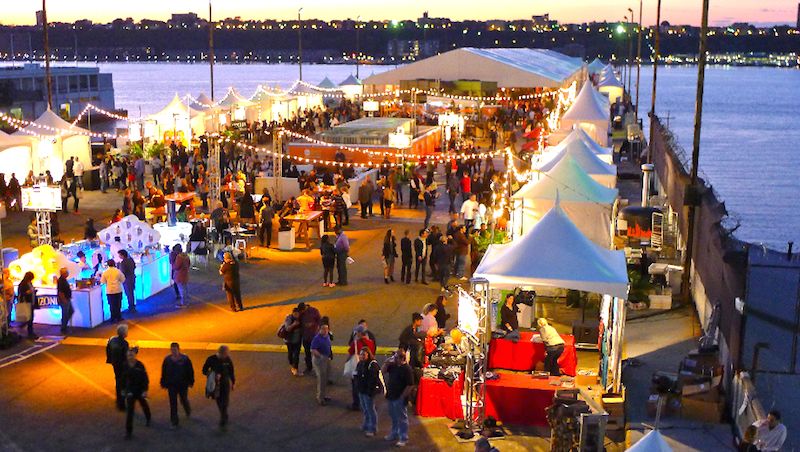
The temporary architecture of gatherings that reshape cities, test their limits, and then quietly vanish.
Most cities are defined by permanence. Their streets, buildings, and institutions suggest stability. Yet at certain moments each year, familiar urban environments change scale and function. Populations multiply, traffic patterns shift, and public space is reorganised to accommodate collective experience. For travellers, these periods reveal how flexible and responsive cities can be.
When Scale Changes Overnight
Some cities remain physically intact but transform in intensity. During the Edinburgh Festival Fringe in Edinburgh, theatres operate in lecture halls, basements, and temporary structures. Posters layer across historic walls, and quiet streets absorb thousands of additional visitors. The architecture does not change, but its purpose expands.
In northern India, the scale is even more dramatic during the Kumbh Mela. Millions of pilgrims gather at designated river sites, and vast temporary settlements are constructed with roads, sanitation systems, medical facilities, and security networks. What appears for a short period resembles a fully functioning city, carefully planned and coordinated, only to be dismantled after the gathering concludes.
Cities Built for Celebration
Other festivals temporarily reorganise public space through celebration rather than pilgrimage. In Buñol, Spain, La Tomatina transforms an ordinary town into a controlled site of collective participation. Streets close, trucks enter, and civic authorities manage safety and cleanup for an event that lasts only hours but requires months of preparation.
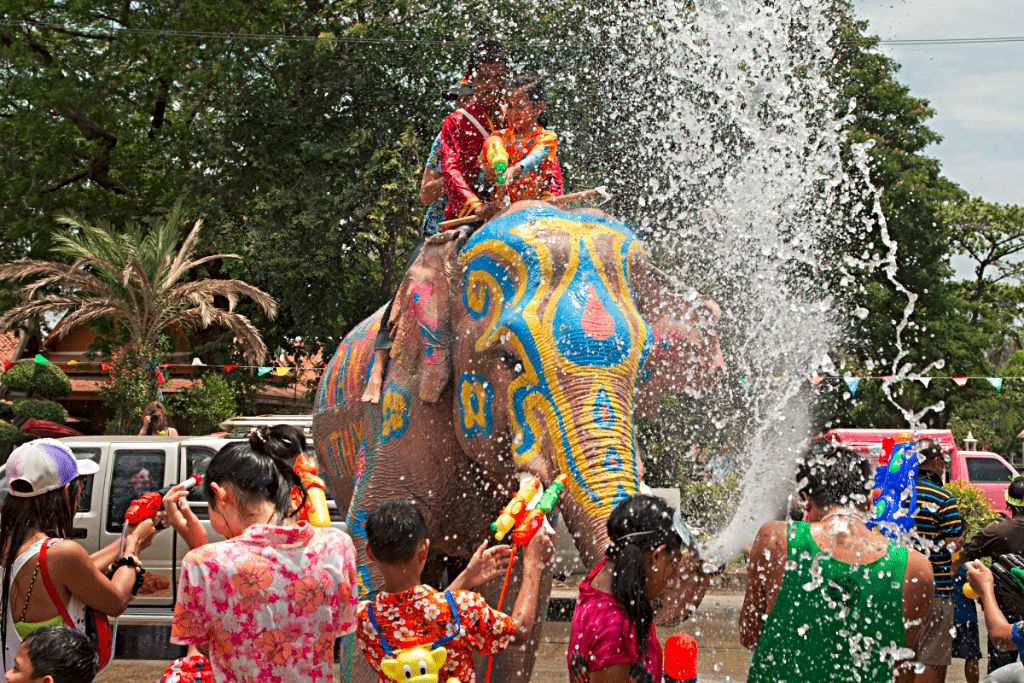
In Thailand, Songkran reshapes cities nationwide. Public roads become zones of water exchange, traffic is redirected, and businesses adapt to a temporary shift in behaviour. The transformation is cultural as much as spatial, as ritual and celebration temporarily override everyday routine.
These festivals demonstrate that cities are not rigid frameworks. They are capable of hosting entirely different modes of interaction when required.
Temporary urban expansion places visible pressure on systems that normally operate quietly. Transportation networks must absorb surges. Waste management scales rapidly. Healthcare and emergency services adjust to fluctuating populations. Accommodation markets shift in response to demand.
For travellers, witnessing this adaptation offers insight into how cities function beyond their postcard image. Logistics become part of the experience. The movement of crowds, the redirection of traffic, and the coordination of services reveal an underlying structure that supports collective gatherings at scale.
After the Crowd Disperses
When the final procession ends and visitors begin their journeys home, the city exhales. Temporary structures are dismantled, barricades removed, and transport schedules return to their ordinary rhythm. What felt immense only days earlier contracts back into familiar streets and neighbourhoods.
The infrastructure may disappear, but the capacity remains. Large gatherings reveal how quickly cities can expand, organise, and absorb extraordinary pressure without permanent transformation. For travellers, witnessing this return to routine can be as revealing as the event itself. A city built for a moment ultimately restores its balance, yet it carries forward the quiet proof of its resilience.